REMUNERATION REPORT
REMUNERATION REPORT
The Remuneration Report, which forms part of the Directors’ Report, provides information about the remuneration of the Directors of CLINUVEL PHARMACEUTICALS LTD and Other Key Management Personnel for the year ended 30 June 2020.
Key Management Personnel (‘KMP’) has the meaning given in the Australian Corporations Act and who together have the authority and responsibility for planning, directing and controlling the activities of the Group, being (see right).
The Remuneration Report is set out under the following main headings:
A. Introduction by the Chair of the Remuneration Committee
B. Remuneration Governance
C. Executive Remuneration
D. Non-Executive Remuneration
E. Service Agreements 2019/20
F. Share Based Remuneration
G. Details of Remuneration
H. Additional Information – Remuneration
A. INTRODUCTION BY THE CHAIR OF THE REMUNERATION COMMITTEE

Chairman of the Remuneration Committee: Mr Willem Blijdorp
As the Chair of the Remuneration Committee, I am pleased to present our Board’ Remuneration Report for the year ended 30 June 2020.
We have kept the format of this year’s Remuneration Report consistent with last year’s since there have not been any significant changes in internal policies or regulations.
I oversee the Group’s remuneration philosophy which aims to attract, retain and motivate talented professionals we require for the Company to meet its strategic objectives. In this process, we wish to see professionals receive appropriate acknowledgement and remuneration.
The Remuneration Committee oversees a remuneration policy of the Group to ensure it is fair, competitive with international peers and transparent. All in all, we strongly believe that a remuneration policy well implemented should help us drive growth strategy and sustainability of CLINUVEL, and thus far we have been proven right.
In 2020, CLINUVEL delivered another year of growth despite the global pandemic and lockdowns affecting all EU countries and the US. Whilst many peer companies have been posting losses and have been required to raise capital, CLINUVEL’s Board and shareholders were fortunate to have a prudent executive management team who had foreseen and planned for the economic downturn and maneuvered the Company through tough times.
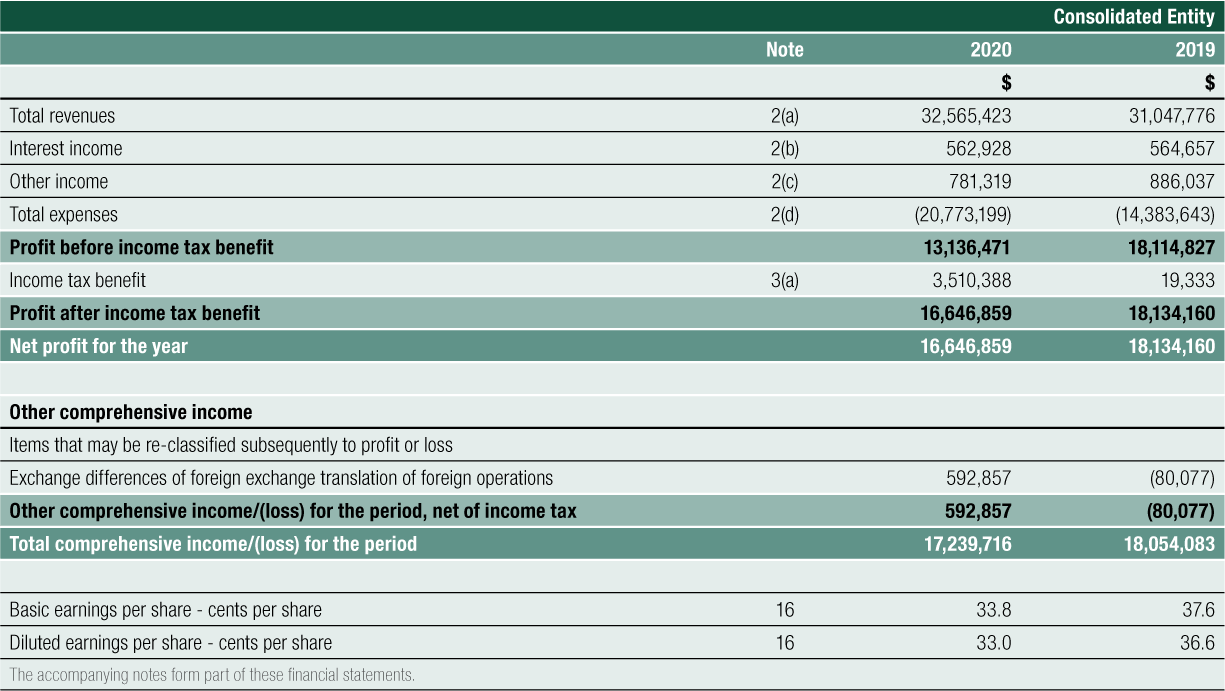
In the past year, we increased our revenues by 4%, our cash reserves by 23% and expanded the distribution of SCENESSE® across Europe. Standing tall and with some Dutch pride I look at how CLINUVEL posted an NPAT of A$16.6M and PBIT of A$13.1M in the middle of a global crisis and when many hospitals in Europe and US were not seeing out-patients in the first half of 2020. Our management skilfully came up with a plan to guarantee continuity of treatment for these patients able to travel under the national restrictions imposed by governments.
The Remuneration Committee with consensus of the full Board designed a Performance Rights Plan, which had received shareholder approval in November 2019 and which outlines step by step the Performance Conditions which need to be met for the Company to grow on all fronts within a vesting period of 4 years. This progressive but realistic business plan is being implemented and incentivizes executives and staff along the way. Assuming these Performance Conditions are met the Company should have grown significantly in value, providing commensurate returns for shareholders.
As I had stated in relation to the Committee’s intentions in 2019, this year we reformed the Executive Agreements by eliminating cash-based Business Generating Incentives, and substituting these by a Performance Rights Plan vesting over 4 years. This PRP aims to incentivize and align the interests of the management team with those of shareholders, and in a dual position as Chairman of the Remuneration Committee and also as larger investor of the Company I fully support this direction.
In building this Company, a careful financial and operational approach is taken which is receiving much recognition from the financial community I am in contact with and despite the shortselling we have seen in CLINUVEL the past year. The cost of issuing shares repetitively, the dilution caused to shareholders and the distraction to a management has been successfully avoided, and in terms of risk management we could not have asked for more.
In 2020, we also implemented the decision which forms part of the Company’s policy that non executive directors will not participate in a Performance Rights Plan or Options Scheme since we wish to retain the independence of the non-executive directors.
In recent weeks, the Remuneration Committee and Board has been surprised, impressed but proud to learn that our CEO has waived and rejected his STI awarded to him for achieving 70% of the KPIs for 2020. His decision reflects an unusual and amazing leadership in the industry, awareness of the world and extraordinary sensitivities to ask the Remuneration Committee to reinvest these monies for further growth of the Company. In my long career it is rare to find executives who independently pass on their incentives and financial awards for the greater benefit of the Company, shareholders and patients: in Philippe we have long identified a professional of different calibre.
Finally, to summarize in a more personal way, I see the current performance of the Company as follows. The approach and policies of the Remuneration Committee need to change with the times we are living in, and therefore a company and management team needs to be innovative and behave in an entrepreneurial way. For this to succeed, the Company needs to provide a working environment for them to stay on and incentivize them for their achievements.
In CLINUVEL, we have a CFO, CSO and CEO who have this mindset and are not getting out of the boat half-way down the trip: their trip is far from easy, but they have delivered and continue to perform and have built a Company to survive all challenges. As Chairman of the Remuneration Committee this is amazing, I am not sure I would have the stamina to stay on this project for 2 decades.
My vision is simple, entrepreneurship is to implement new combinations, create new business models and change when the environment asks you to do this. With this mindset, this management team is beating all challenges even in the face of economic hard times.
I recommend the Remuneration Report 2020 to all our shareholders and proxy representatives.
Willem Blijdorp, Chairman of the Remuneration Committee
Amsterdam
B. REMUNERATION GOVERNANCE
(i) Remuneration Committee
The Board has provided a mandate to the Remuneration Committee to assist and advise on determining appropriate remuneration policies for its KMP over time, taking into account the relationship between pay and performance, and the results of any evaluations or review processes. The Board has also provided a mandate to the Remuneration Committee to provide advice on non-executive director fees and advice on setting salaries and fees, short- and long-term incentives and employment terms and conditions for its Key executives.
The objectives of the Remunerations Committee’s responsibilities are to ensure that:
a) Remuneration of the Company’s KMP is aligned with the interests of the Company and its shareholders within an appropriate control framework, taking into account the Company’s strategies and risks.
b) The level and composition of remuneration attracts, retains and motivates people of high calibre and with unique specialist industry knowledge to work towards the long-term growth and success of the Company.
c) The role that total fixed remuneration and short- and long-term incentives play is clearly defined and provides a clear relationship between performance and remuneration.
d) The levels and structure of remuneration are benchmarked against relevant peers and considered against global employment market conditions.
e) The Company gives due consideration to applicable legal requirements and appropriate standards of governance.
The methods used by the Remuneration Committee to assess Board performance is disclosed in the Corporate Governance Protocol.
(ii) Remuneration Recommendations
Under the provisions of the Committee’s Charter, the Committee may engage the assistance and advice from external remuneration advisors. To ensure that any recommendations made by remuneration consultants are provided without undue influence being exerted by Executives, external remuneration consultants deliver their advice directly to members of the Committee.
(iii) Voting and feedback at the Company’s last Annual General Meeting
In the 2019 Annual General Meeting (AGM), the Company obtained 88.96% of the proxy votes (including votes at the Board’s discretion) in favour of adopting the 2018/19 Remuneration Report, and this resolution was carried in favour by poll with 87.69% of votes cast. The Company did not receive any further specific feedback at the AGM on its remuneration practices.
(iv) Historical voting at the Company’s Annual General Meetings since 2006
Since 2006 the Company has obtained a historical average of 92%of proxy votes received (including votes at the proxy’s discretion), either carried by a show of hands prior to and including the 2014 AGM or by a poll result after the 2014 AGM, in favour of adopting the Remuneration Reports presented.
C. EXECUTIVE REMUNERATION
(i) Executive Remuneration Framework
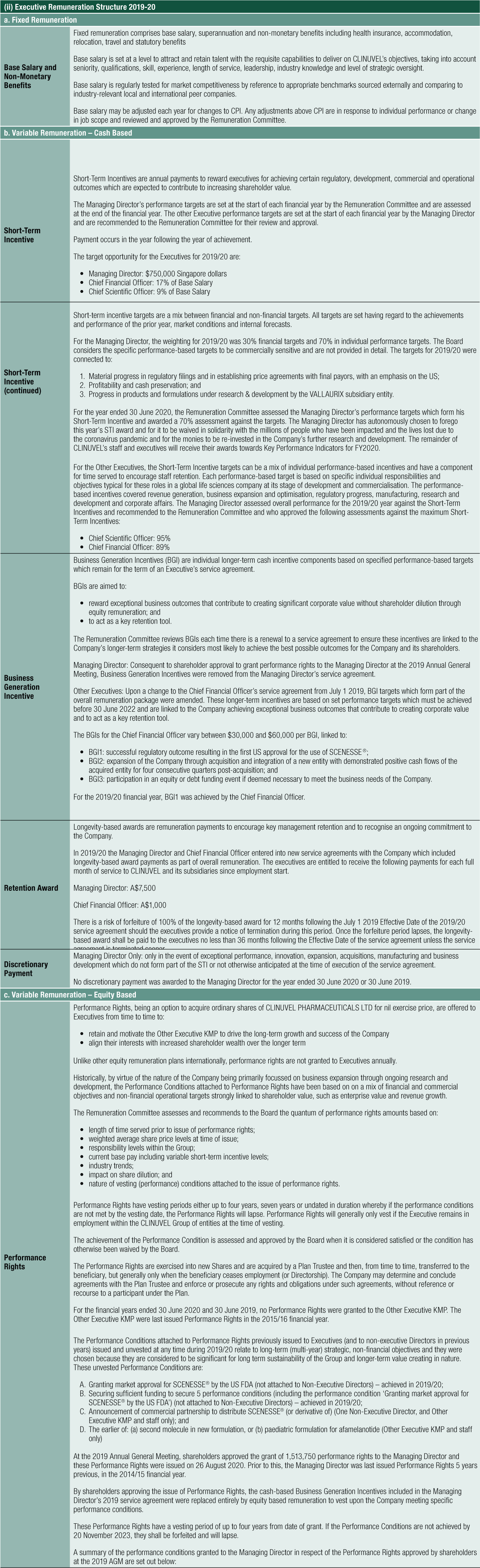
The Company’s reward framework has historically provided for a mix of fixed pay and variable pay. The variable pay is structured to incentivise:
- Short-term (generally cash payments in the form of performance-based incentives awarded at a fixed amount or as a percentage of base salary).
- Long-term (generally based upon the issue of performance rights to acquire shares in the Company, and in relation to the Managing Director and to the Chief Financial Officer, other fixed amount cash incentives, including retention awards to recognise ongoing commitment to the Company).
The following diagram links each of the executive remuneration components to the Company’s mission and strategy.
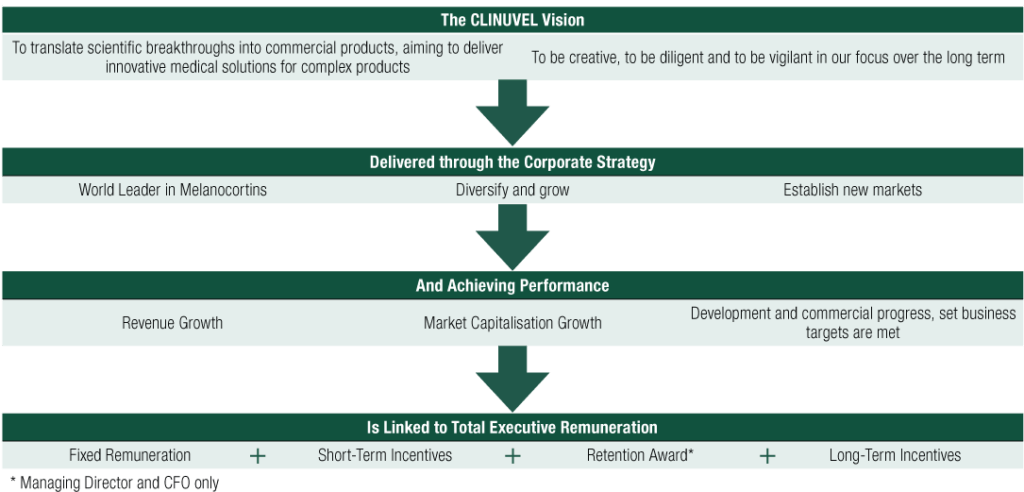
* Managing Director and CFO only
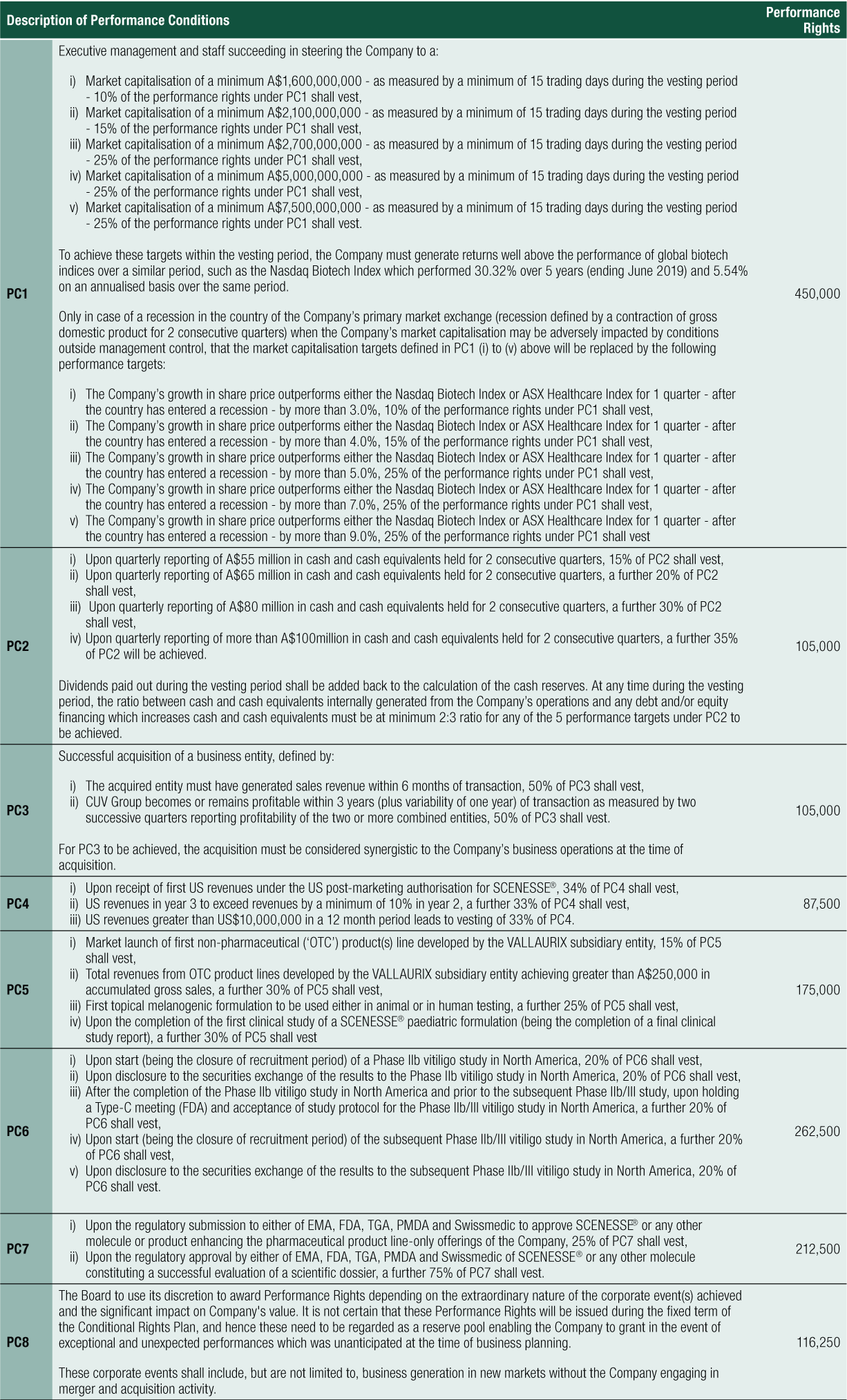
(iii) Managing Director Remuneration – Further Information
The inherent risk of failure within pharmaceutical development is high and this risk is magnified for the Company due to its specialised and narrow focus on developing and commercialising a novel, first-in-class and first-in-line therapies in diseases where there is an unmet clinical need.
The current progress and success of the Company needs to be set against the previous managerial attempts which had posed operational, regulatory and financial challenges. To mitigate the risk and to provide a strong platform to achieve meaningful progress, the Board has followed a business model where most operational skills are retained in-house, where possible, and most management responsibilities are concentrated between the Managing Director (acting in a dual capacity as Chief Executive Officer and Chief Medical Officer) and the Chief Scientific Officer. The Managing Director has the responsibility of guiding and overseeing the execution of the overall corporate strategy, has global responsibility for the safety aspects of the drug (including pharmacovigilance and quality management) and is responsible for commercial drug pricing and reimbursement negotiations. The Chief Scientific Officer is responsible for pre-clinical programs, toxicology, the manufacturing of the drug delivery program, clinical program and setting the regulatory strategies in close coordination with the Board of Directors. As the business evolves and progresses through its development path, this centralised management model will continue to evolve, and key management responsibilities will be shared across new and existing senior management throughout the Group.
The Managing Director’s remuneration structure is reviewed every three years to ensure:
- A maximum level of incentivisation to lead and advance the Company’s program from its current stages of development and commercial growth to serve the long term interest of the Company, taking into account the unique risk and complexity within the business model; and
- It is competitive in international markets, industry and related fields of expertise and providing for specific skillsets.
- longevity of his 15 years of service as CEO compared against local and international peers;
- track record, integrity and professional qualifications for the position;
- the enterprise value created since first employment;
- the shareholder value created in the past three years leading up to the renewal to the service agreement (from 1 July 2016 to 30 June 2019);
- capability to sustain the Company’s focus to maximise profitability following market access; and
- a demonstrated result to attain stability of the business and management team over the long-term.
(iV) Executive Remuneration Benchmarking
One of the objectives of the Remuneration Committee’s responsibilities is to ensure that the levels and structure of remuneration are benchmarked against relevant peers and considered against global employment market conditions. CLINUVEL refers to a select group of publicly listed companies on the ASX and on international securities exchanges for the purpose of peer group analyses. The selection criteria for these companies is broadly based on comparison of:
a) businesses of similar complexity and innovative nature,
b) businesses of similar scope and scale,
c) sectors requiring highly technical and specialised skills,
d) businesses of similar value, reflected in market capitalisation,
e) businesses who have demonstrated similar progress in achieving business outcomes, and
f) businesses of similar risk profile.
CLINUVEL aims to provide competitive remuneration for the Managing Director based on both local and international comparable positions in the relevant market(s). CLINUVEL is a company operating globally with the bulk of its operations and financial exposure falling outside Australia. Its remuneration structure requires to be competitive to international benchmarks.
During the year the Managing Director’s remuneration was benchmarked against 6 revenue-generating Australian-listed life science companies with market capitalisation between $400 million and $2 billion, along with 11 profit-generating US-listed pharmaceutical companies with market capitalisation between US$200 million and US$10 billion. The current total remuneration level of the Managing Director remains below the median level.
(V) Relationship Between Remuneration And Performance
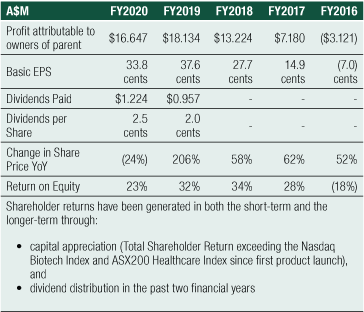
The Group has been solely dedicated to the research, development and commercialisation of its unique and medically beneficial technology. The remuneration and incentive framework, which has been put in place by the Board, has ensured executive personnel are focussed on both maximising short-term operating performance and long-term strategic growth to promote shareholder value. The focus on growth in shareholder value has been centred on achievement of regulatory, development, commercial and operational outcomes, where financial metrics are not necessarily an appropriate measure of executive performance and is commonly expected in other market segments. In recent years the Board has recognised that both financial and non-financial performance measures have been a key link to driving share price performance and this has been reflected in various performance conditions attached to the long-term equity incentives.
The table below shows the progress made in moving through the clinical pathway and into the commercialisation pathway, reflecting the performance of executive management under the leadership of the Managing Director. The table also links to share price performance.
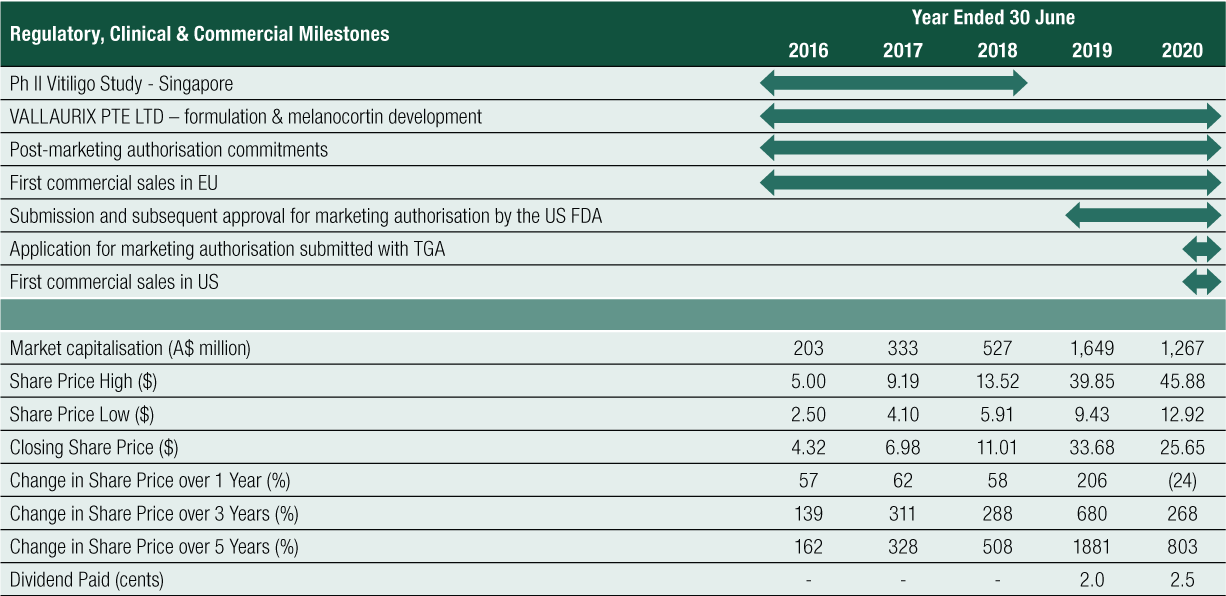
(vi) Executive Remuneration Pay Mix
The Board believes the remuneration mix aligns the Managing Director and Other Executive KMP to shareholder interest. The remuneration mix for 2019/20 is demonstrated as follows:


A comparison of the 3-Year and 5-Year Total Shareholder Return (TSR) of life science peer companies (being a mix of medical device, pharmaceutical product and diagnostic focussed companies) referred above in section (iv) with CLINUVEL’s TSR for the same period shows CLINUVEL is ranked fourth and third respectively.
D. NON-EXECUTIVE REMUNERATION
The Board seeks an appropriate mix of skill, diversity, experience and specific expertise to steward the Company’s success. The Remuneration Committee recommends to the Board individual Non-Executive Director fee levels to attract and retain those with the aforementioned attributes, having regard to global employment market conditions and consultation with specialist remuneration consultants with experience in the healthcare and biotechnology industries.
Non-Executive Director Fees
Non-Executive Director fees consist of base fees and committee fees and are inclusive of superannuation and all other contributions. There are no further retirement benefits. The fees are outlined in the table below (see right).
Under the Company’s Constitution, the maximum aggregate remuneration available for division among the Non-Executive Directors is to be determined by the shareholders in a General Meeting and was set at $700,000 at the 2019 AGM. This amount (or some part of it) is to be divided among the Non-Executive Directors as determined by the Board. The aggregate amount paid to Non-Executive Directors for the year ended 30 June 2020 was $387,417.
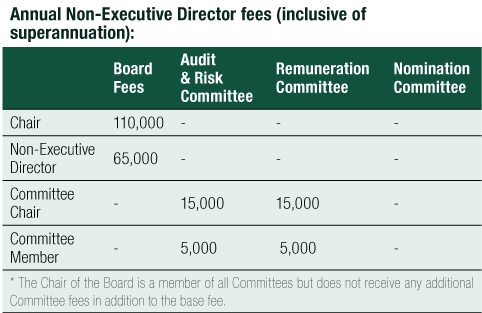
Annual Non-Executive Director fees (inclusive of superannuation):
Non-Executive Director Long-Term Incentive – Equity Compensation
The long-term equity remuneration was formerly provided to Non-Executive Directors via the CLINUVEL Conditional Rights Plan and the Performance Rights Plan. Any issue of performance rights to Non-Executive Directors requires shareholder approval.
The Board had previously considered the relatively small management team comparative to peer companies when setting Non-Executive Director remuneration policy. The Board considered that from time to time its Non-Executive Directors would become involved in steering management and engage in certain operational matters that would not commonly be expected of those in a non-executive capacity. Furthermore, the Company ensured the interests of all its KMP, including those in a non-executive capacity, were aligned with the interests of the Company and its shareholders within an appropriate control framework, addressing the preference of some shareholders to see Non-Executive Directors have shareholdings in the Group.
It is no longer planned for Non-Executive Directors to participate in long-term equity compensation plans. Only one current Non-Executive Director in Mrs Shanahan still holds Performance Rights, the last date of issue being November 2014.
E. SERVICE AGREEMENTS 2019/20
Remuneration and other terms of employment for the Managing Director is formalised by a service agreement determined by the Remuneration Committee. The agreement provides for base salary, short- and long-term incentives, other benefits and participation, when eligible, in the CLINUVEL Performance Rights Plan.
The Managing Director, in consultation with the Remuneration Committee, oversees the service agreements entered into with other Executive KMP, providing for base salary, incentives, other benefits and participation, when eligible, in the CLINUVEL Conditional Rights Plan.
On appointment to the Board, all Non-Executive Directors enter into a service agreement with the Company in the form of a letter of appointment. The letter summarises the Board’s policies, the Director’s responsibilities and compensation for holding office. The details of the service agreements to the Managing Director and Executive KMP are:

F. SHARE-BASED REMUNERATION
The Group has an ownership based scheme for Directors4, Other Executive KMP, employees and select consultants of the Company which is designed to provide long-term incentives to deliver long-term value.
Performance Rights
All Performance Rights that have been issued fall under two Performance Rights plans:
a) the CLINUVEL Conditional Performance Rights Scheme (2009); and
b) the CLINUVEL Performance Rights Plan (2014).
152,710 Performance Rights issued under the 2009 Scheme remain unvested as at 30 June 2020 and there are no further performance rights issued under the 2014 Plan remaining unvested at 30 June 2020. 1,513,750 Performance rights were approved by shareholders to grant to the Managing Director at the 2019 AGM under the 2014 Plan. It is no longer intended to issue performance rights under the 2009 Plan.
a) Conditional Performance Rights Scheme (2009)
The Conditional Performance Rights Scheme (2009) is available to eligible employees of the Company. Any issue of rights to Directors requires shareholder approval in accordance with ASX Listing Rules. All rights convert to one ordinary share of the Group and are issued for nil consideration, have no voting rights, are non-transferable and are not listed on the ASX. These can be converted to ordinary shares at any time once the vesting conditions attached to the rights have been achieved, whereby these will be held in a Scheme Trust on behalf of the eligible employee for up to seven years.
The eligible employee can request for shares to be transferred from the Scheme Trust after seven years or at an earlier date if the eligible employee is no longer employed by the Company or all transfer restrictions are satisfied or waived by the Board in its discretion.
4 It is no longer planned for Non-Executive Directors to participate in long-term equity compensation plans. Please refer to ‘Non-Executive Director Long-Term Incentive – Equity Compensation’ in section D to this Remuneration Report
b) Performance Rights Plan (2014)
The Performance Rights Plan (2014) is available to eligible persons of the Company. Any issue of rights to Directors requires shareholder approval in accordance with ASX Listing Rules. All rights convert to one ordinary share of the Group and are issued for nil consideration, have no voting rights, are not listed on the ASX and are non-tradeable (other than with prior written Board consent). They can be converted to ordinary shares at any time once the vesting conditions attached to the rights have been achieved, whereby, at the discretion of the Board, they will be held in a Plan Trust on behalf of the eligible person.
The eligible person cannot trade the shares held by the Plan Trustee without prior written Board consent until the earlier of seven years from grant date of performance rights, when the eligible person ceases employment or when all transfer restrictions are satisfied or waived by the Board in its discretion. Unless the Performance Rights are granted with a shorter vesting period, Performance Rights under this plan lapses after seven years from grant date.
Performance rights are valued for financial reporting purposes using either a Monte Carlo simulation pricing model or a binomial valuation pricing model and are represented as accounting values only in the financial statements. Holders of Performance Rights may or may not receive a benefit from these amounts, either in the current or future reporting periods. The value of all Performance Rights granted, exercised and lapsed during the financial year is detailed in the tables within the Remuneration Report.
G. DETAILS OF REMUNERATION
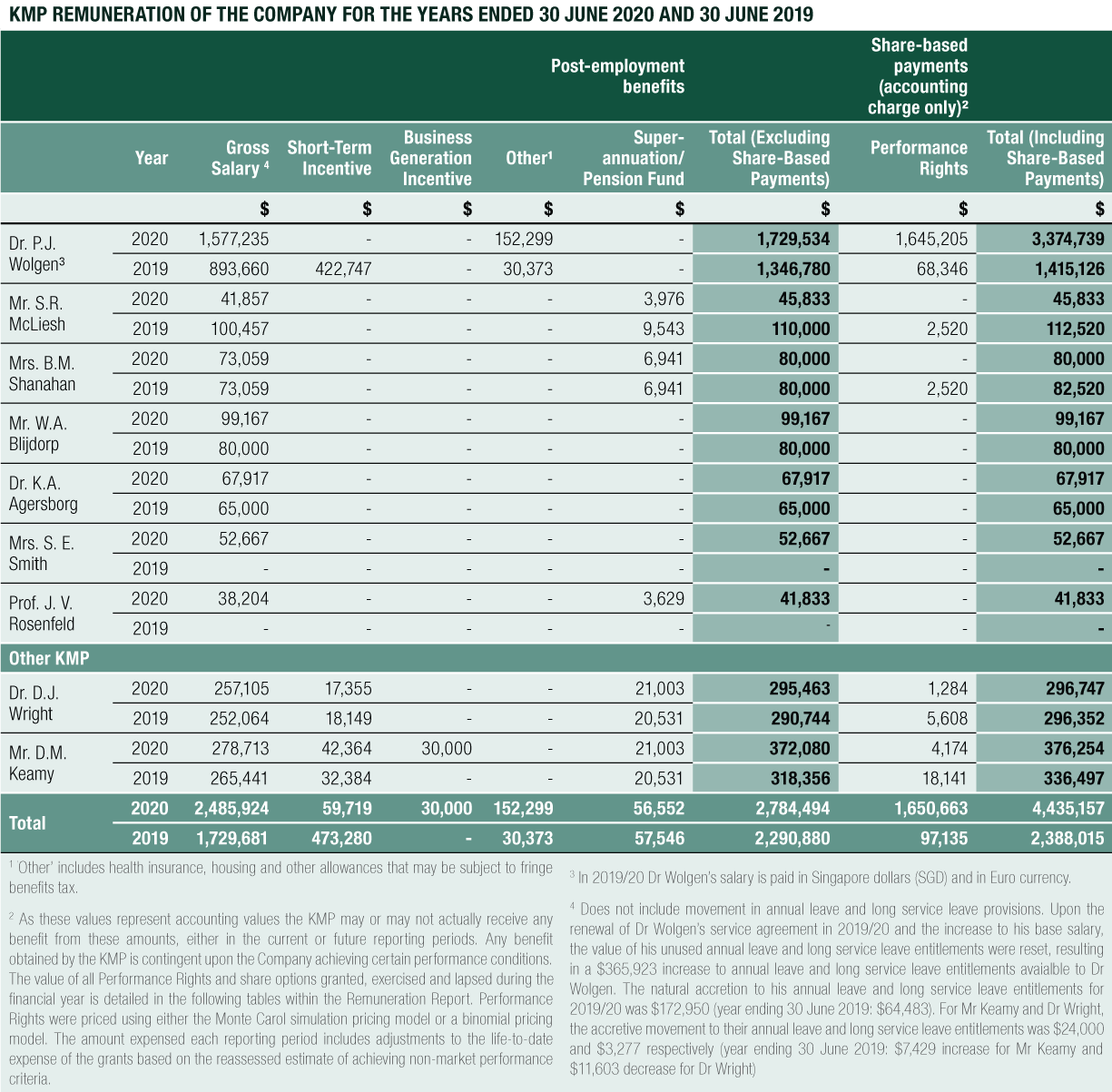
KMP REMUNERATION OF THE COMPANY FOR THE YEARS ENDED 30 JUNE 2020 AND 30 JUNE 2019
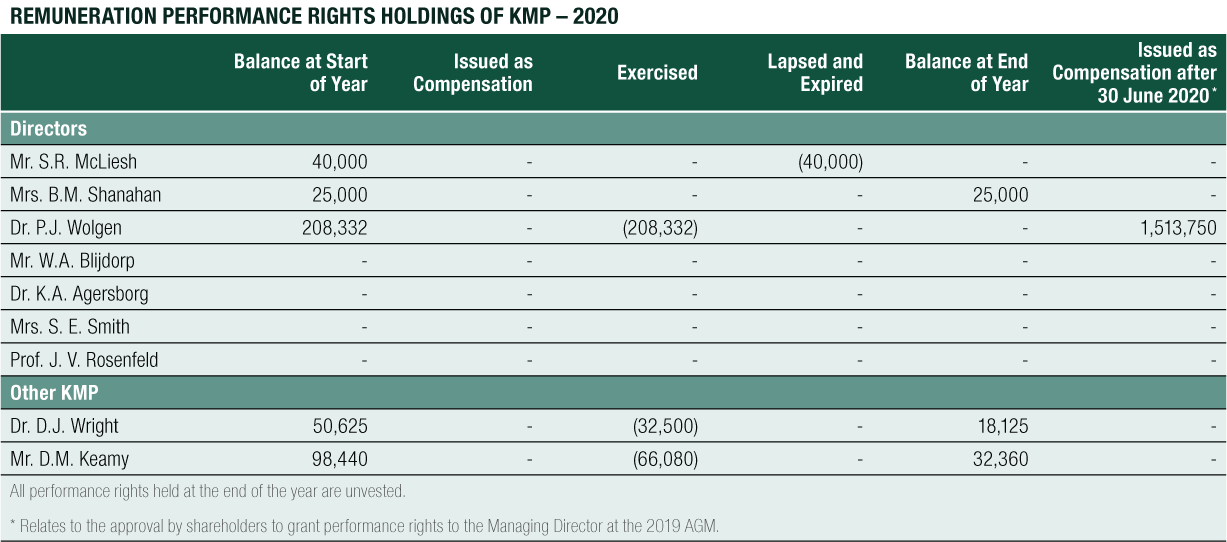
REMUNERATION PERFORMANCE RIGHTS HOLDINGS OF KMP - 2020
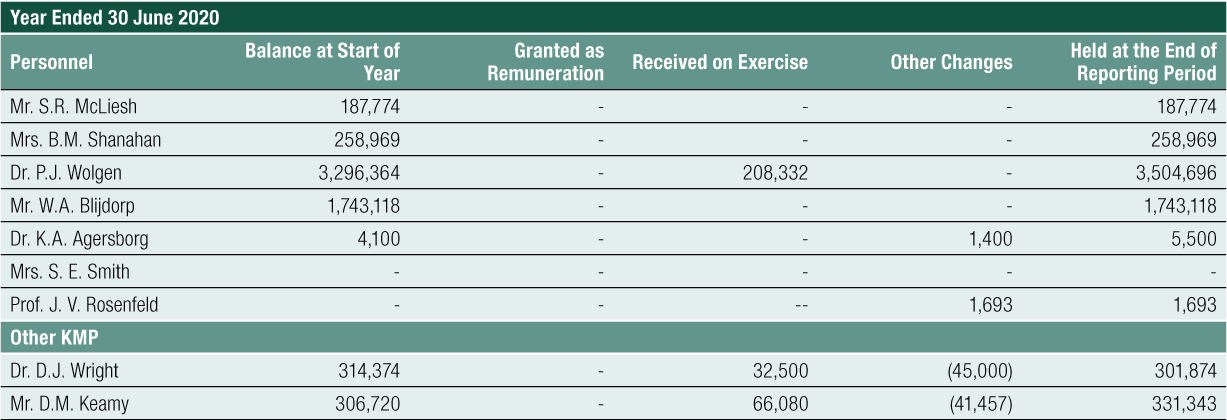
SHARES HELD BY KMP
The number of ordinary shares in the Company during the 2019/20 reporting period held by each of the Group’s KMP, including their related parties, is set out below:

TERMS AND CONDITIONS OF EACH GRANT OF RIGHTS AFFECTING REMUNERATION IN THE CURRENT OR FUTURE REPORTING PERIODS
H. ADDITIONAL INFORMATION – REMUNERATION
For each cash incentive and right granted, the percentage of the available grant or cash incentive that was paid or vested in the financial year, and the percentage forfeited due to unmet milestones (including service length), is set out below. Cash incentives are paid in the year following the period of performance.
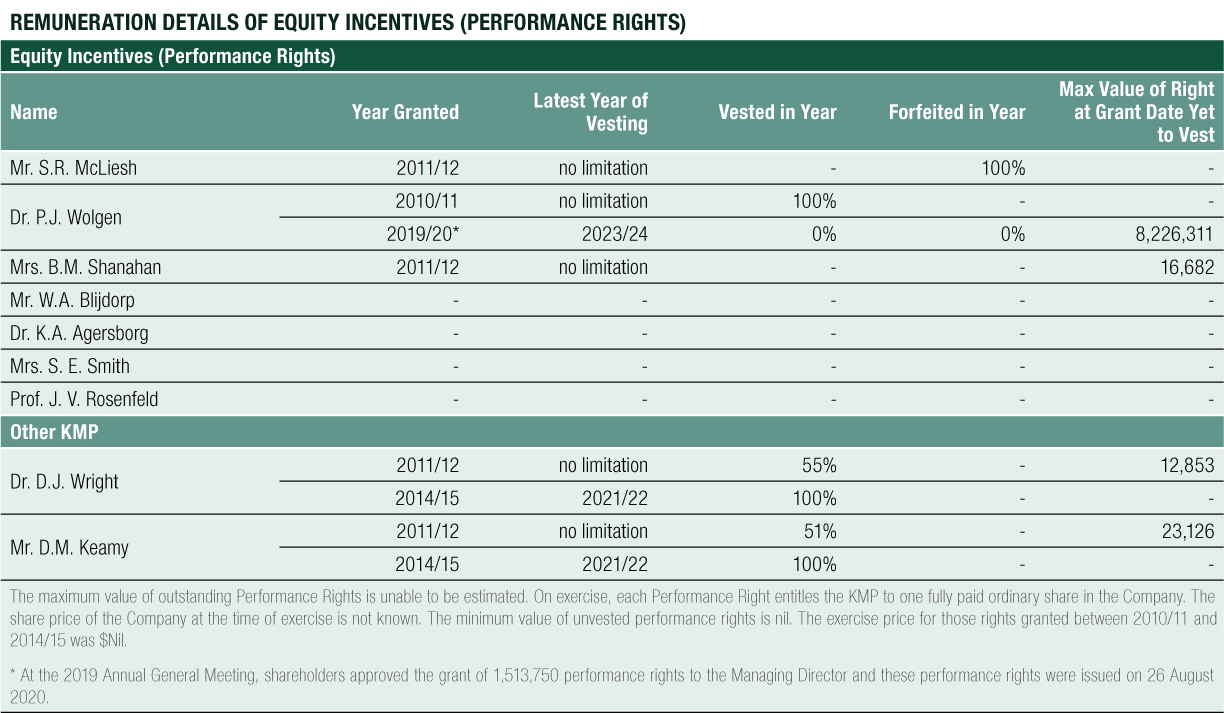
REMUNERATION DETAILS OF EQUITY INCENTIVES (PERFORMANCE RIGHTS)

REMUNERATION DETAILS OF CASH INCENTIVES
LOANS TO DIRECTORS AND EXECUTIVES
No loans were granted to Directors or executives for the years ended 30 June 2020 and 30 June 2019.
SHARES PROVIDED UPON EXERCISE OF RIGHTS


DETAILS OF SHARES ISSUED DURING THE FINANCIAL YEAR AS A RESULT OF EXERCISE OF RIGHTS
DETAILSOF SHARES ISSUED DURING THE YEAR TO EMPLOYEES FROM THE 2009 SCHEME TRUST AND THE 2014 PLAN TRUST
NON-AUDIT SERVICES
For the year ended 30 June 2020, Grant Thornton Australia provided audit services to the Company. Grant Thornton Australia also provided non-audit services, specifically tax related services. Details of amounts paid or payable to the auditor for non-audit services provided during the year by the auditor are outlined in Note 19 to the financial statements.
The Directors are satisfied that the provision of non-audit services, during the year by the auditor is compatible with the general standard of independence for auditors imposed by the Corporations Act 2001. The Directors are of the opinion that the services as disclosed in Note 19 to the financial statements do not compromise the external auditor’s independence, based on advice received from the Audit Committee, for the following reasons:
- all non-audit services have been reviewed and approved to ensure that they do not impact the integrity and objectivity of the auditor; and
- none of the services undermine the general principles relating to auditor independence as set out in APES 110 ‘Code of Ethics for Professional Accountants’ issued by the Accounting Professional & Ethical Standards Board, including reviewing or auditing the auditor’s own work, acting in a management or decision-making capacity for the Company, acting as advocate for the Company or jointly sharing economic risks and rewards.
AUDITOR’S INDEPENDENCE DECLARATION
The auditor’s independence declaration as required by s.307C of the Corporations Act 2001 is included and forms part of this Directors’ Report.
PROCEEDINGS ON BEHALF OF THE COMPANY
No person has applied for leave of Court to bring proceedings on behalf of the Company or intervene in any proceedings to which the Company is party for the purpose of taking responsibility on behalf of the Company for all or any part of those proceedings.
The Company was not party to any such proceedings during the year.
Signed in accordance with a resolution of the Board of Directors pursuant to s.298(2) of The Corporations Act 2001.
Dr. Philippe Wolgen, MBA MD Director
Dated this 26th day of August, 2020